Influencer Fraud Statistics 2026: The $4.8 Billion Receipt
Influencer fraud is projected to cost brands $4.8 billion in 2026 — a 269% jump from $1.3 billion in 2019. Here's what the data actually says, and what it means for your budget.
By Creator Receipts · July 8, 2026 · 7 min read
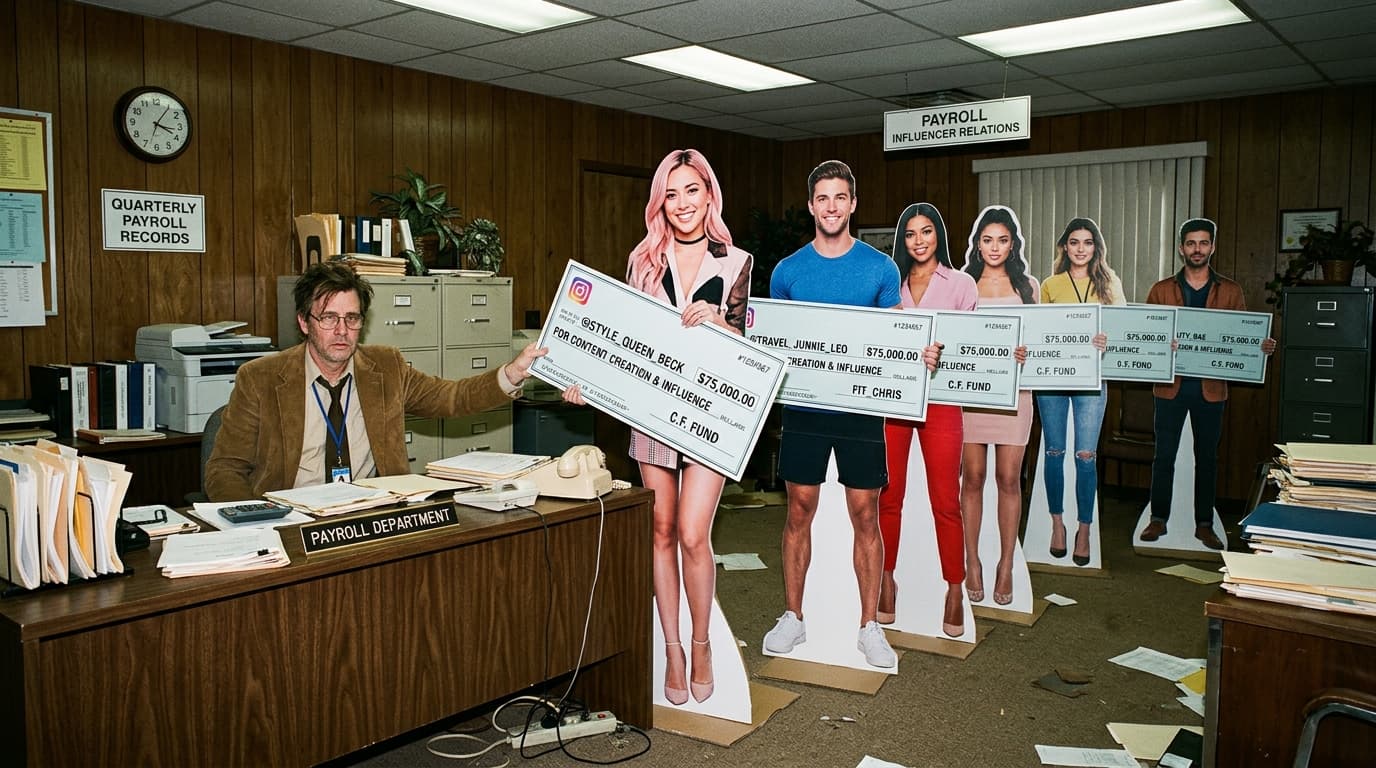
The short answer: Influencer fraud is projected to cost brands $4.8 billion in 2026 — a 269% jump from the $1.3 billion documented in 2019. Fake followers, rented engagement, and now fully AI-generated "creators" are the drivers. The uncomfortable part isn't the size of the number. It's that seven years in, the industry still hands you no reliable way to check before you pay.
Key Takeaways
- 2026 projection: ~$4.8 billion in global influencer fraud losses, a 269% increase over 2019 (industry estimates, 2026). Treat it as a projection, not gospel — but the trendline is the point.
- The 2019 anchor is bulletproof: $1.3 billion. That figure comes from a University of Baltimore economist, not a content farm (CNBC, 2019).
- Roughly 1 in 6 dollars was fraud even back then. The $1.3B was ~15% of the 2019 influencer market (CBS News). The market got bigger; the percentage didn't get better.
- About half of influencers have shown signs of fraud. HypeAuditor found ~50% of Instagram influencers showed fraud signals, and ~22% of their followers were suspicious (ION / HypeAuditor).
- The math is personal. If ~12–15% of a creator's audience is fake, that's the share of your spend buying nobody. Run a free receipt before you send the offer, not after.
A professor at the University of Baltimore sat down in 2019, pulled the data on the fake-follower economy, and put a price tag on it: $1.3 billion. That was the year "influencer fraud" stopped being a vibe and became a line item.
Seven years later, the projected number for 2026 is $4.8 billion.
That's a 269% jump. And here's the thing nobody selling you an influencer platform wants to sit with: the market didn't get more honest as it got bigger. It got more expensive to be fooled.
How much does influencer fraud cost in 2026?
Global influencer fraud is projected at roughly $4.8 billion in 2026, up from $1.3 billion in 2019 (industry benchmark estimates, 2026). That's the headline figure making the rounds this year, and it's a 269% climb over the seven-year window.
Now let me be the friend who reads the receipts instead of just forwarding them. A lot of the 2026 fraud stats floating around right now trace back to blog posts citing other blog posts — the influencer-stats industry has its own fake-follower problem, ironically. So take the exact $4.8B as a projection, not a measurement.
But you don't need the decimal to be perfect to see the trend. Because the baseline — the number the whole trendline is built on — is one of the most solid figures in this entire industry.
Where the $1.3 billion baseline actually came from
In July 2019, Roberto Cavazos, an economist and professor at the University of Baltimore, published a study with the cybersecurity firm Cheq titled The Economic Cost of Bad Actors on the Internet. His estimate: influencer fraud would cost advertisers $1.3 billion in 2019 (CNBC; CBS News).
This is the part worth underlining. That $1.3B wasn't a marketing agency's press release. It was an academic economist modeling fake engagement services, surveying 10,000 influencers, and finding that at least 15% of their collective followers were fake (CBS News).
Fifteen percent. In 2019. Before AI could generate a fake person from scratch.
And $1.3 billion was about 15% of the entire $8.5 billion influencer market that year (CBS News). So roughly one in every six dollars spent on creators went to an audience that didn't exist.
That's the real story the $4.8B number is telling. Not "fraud appeared." Fraud was already baked in at 15 cents on the dollar — and the market spent seven years scaling up around it instead of fixing it.
Why the losses keep climbing
Picking a creator by follower count is like hiring a lifeguard because they own a lot of swimsuits. The number looks relevant. It tells you nothing about whether anyone's actually going to get saved.
Here's what the audits keep finding underneath the follower counts:
- ~50% of Instagram influencers have shown signs of fraud. HypeAuditor's analysis found about half of influencers displayed fraud signals, and roughly 22% of their followers were suspicious accounts (ION / HypeAuditor).
- The comments lie too. A large share of engagement on influencer content is inauthentic — pods, bots, and "nice pic 🔥" armies that exist to make dead accounts look alive (ION / HypeAuditor).
- Marketers already know. In HypeAuditor's benchmark work, 63% of marketers said they'd personally been hit by influencer fraud (ION / HypeAuditor). This isn't a secret. It's a cost of doing business that everyone quietly eats.
So the losses climb for a boring reason. The metric everyone still shops on — follower count — is the single easiest thing on a profile to fake. You can buy 10,000 followers for the price of lunch. You cannot buy 10,000 people who actually care.
The new driver: AI got into the fraud business
The 2019 fraud was rented humans and bot farms. The 2026 fraud has a new, more expensive flavor: fully AI-generated creators.
The reporting this year points to AI-synthetic fraud — synthetic personas, AI-grown audiences, generated engagement — overtaking old-school bot fraud as the costliest category, estimated at around $2.1 billion of the 2026 total (industry estimates, 2026). Again: 2026 figure, treat as directional.
But directionally it makes complete sense. In 2019, a fake influencer needed a stolen photo and a bought following. In 2026, they don't need the photo, the person, or the following to be real at all. The whole thing can be conjured. Which means the old advice — "just look for a real face and real posts" — is now worth about as much as the fake followers it was trying to catch.
What the number actually means for your budget
Four-point-eight billion is an industry number. It's easy to read it, wince, and file it under "problems for big brands." It isn't.
Do the small-scale math instead. Say a creator's audience is ~15% fake — right in line with what the 2019 study found, and conservative by 2026 standards. You pay $1,000 for the post. You just spent $150 reaching accounts that will never buy, click, or care. Not because you got scammed by a con artist. Because the platform showed you a follower count and let you assume it meant something.
Now scale that across every creator in a campaign. That 15% is the difference between "influencer marketing doesn't work for us" and "we were paying for the wrong 15% every single time."
This is the part that stings if you've spent your own money on a creator who ghosted the results. It wasn't necessarily a bad creator. It was an unverifiable one — and unverifiable, at these fraud rates, is a bet you keep losing without knowing why.
How to make sure you're not part of the $4.8 billion
You don't need a $299/month enterprise platform to stop funding fake audiences. You need to check three things before the money leaves your hands:
- Is the audience real? Look at the follower quality, not the follower count — the ratio of suspicious to authentic accounts.
- Is the engagement real? Read the actual comments on the last few posts. Real conversation, or a wall of emojis and "amazing 😍" from accounts with no faces?
- Are you paying a fair price for what's actually real? A padded account isn't just risky — it's overpriced, because you're paying premium rates for phantom reach.
That's the entire job Creator Receipts does in a few seconds. Paste a handle, get a receipt: real audience, real performance, fair price. No 15% tax on fakes you didn't know were there.
So here's where the $1.3 billion story lands seven years later. The number quadrupled. The excuse — "there's no real way to check" — did not survive. There is now. The only question left is whether you run the check before you pay, or find out after.
Run a free receipt on any creator — just your email. No card, no trial.
Frequently asked questions
- How much does influencer fraud cost brands?
- Influencer fraud is projected to cost around $4.8 billion globally in 2026, up from a documented $1.3 billion in 2019 — a 269% increase. The 2019 figure was ~15% of the total influencer market that year, meaning roughly one in six ad dollars went to fake audiences.
- What percentage of influencer followers are fake?
- Estimates range widely, but the anchors are consistent: a 2019 University of Baltimore study found at least 15% of surveyed influencers' followers were fake, and HypeAuditor found ~22% of influencer followers were suspicious accounts. On many mid-size accounts it runs higher. Assume double digits until you've checked.
- How do you check if an influencer has fake followers?
- Look at follower quality instead of follower count, read the comments on the last three to five posts for real conversation versus generic bot replies, and watch for engagement that doesn't match audience size. A free tool like Creator Receipts does all three automatically and returns a fair-price read too.
- Is influencer fraud getting worse?
- By total dollars, yes — losses have grown 269% since 2019. The fraud rate as a share of spend has stayed stubbornly high, and AI-generated synthetic creators are now a leading driver, estimated at ~$2.1 billion of the 2026 total. The market grew; the honesty didn't.
Get the receipts in your inbox.
New data on influencer pricing, fake engagement, and how to vet creators. A few times a month, no spam, unsubscribe anytime.