
Where the '11× ROI' Stat Comes From — and Why It's Wrong
The '11× ROI' number every influencer deck quotes traces to a single 2016 CPG study commissioned by a platform. Here's why the industry's favorite ROI stats are quicksand.
By Creator Receipts · July 8, 2026 · 6 min read
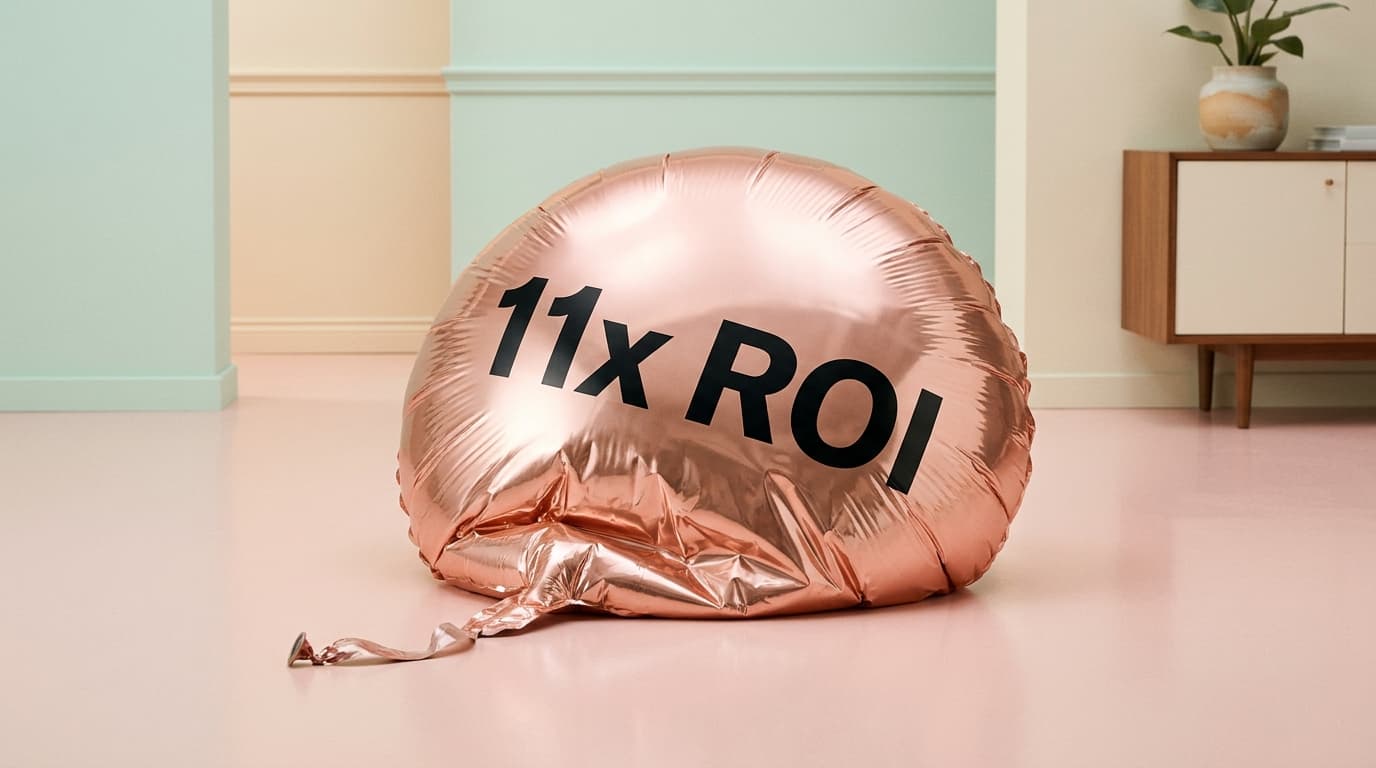
The short version: You've seen "influencer marketing returns 11× ROI" in a hundred decks. It traces to a single 2016 study of one CPG brand, commissioned by an influencer platform. The same goes for "$5.78 per $1" and the various ROAS figures. The methods aren't all fake — but the precise numbers are marketing, and independent economists say ad ROI is barely measurable in the first place.
Key Takeaways
- The famous "11× ROI" traces to one 2016 Nielsen Catalina × Silk single-brand study, commissioned by an influencer platform (Marketing Dive, 2016).
- Other headline numbers ($5.78/$1, ~$2.4–2.6 ROAS) also come from interested parties using modeled or survey methods.
- Independent economists show ad ROI is so noisy that even 200,000-person tests are usually underpowered to confirm it (Lewis & Rao, Quarterly Journal of Economics, 2015).
- Don't budget on borrowed stats. Measure your own — starting with whether the audience is real. Run a free receipt.
Every influencer pitch deck has the slide. Big number, dollar sign, usually "$6.50" or "11×," always presented as settled fact. It's the stat that greenlights budgets.
So let's do the thing nobody does and actually trace it.
Where "11× ROI" comes from
The "11× return" figure — recycled for a decade — comes from a 2016 Nielsen Catalina Solutions study of a single CPG brand (Silk almond milk), commissioned by an influencer platform (Marketing Dive, 2016). The measurement design was legitimate — a real single-source sales-lift model that found roughly 10% incremental sales. But it's one brand, in one category, from the blog era, paid for by a company that sells influencer marketing.
That's not a law of the universe. It's a data point wearing a law's clothing. Quoting it as "influencer marketing delivers 11× ROI" is like tasting one restaurant's soup and publishing the average temperature of all soup.
The other favorites are the same story
"$5.78 earned per $1 spent." "$2.4–2.6 ROAS." These circulate as if they're consensus. They come from interested parties — platforms and agencies — using modeled or survey-based methods, not independent randomized measurement. The value they're gesturing at may well be real. The specific magnitudes are sales collateral.
Why even the honest numbers are shaky
Here's the part that should make everyone humble. Independent economists have shown that advertising ROI is genuinely hard to measure — sales are so noisy that even a 200,000-person randomized test is usually too underpowered to pin down the return, with confidence intervals that routinely exceed 100% (Lewis & Rao, Quarterly Journal of Economics, 2015).
Read that against the influencer decks. If a rigorous six-figure-sample experiment can barely confirm ad ROI, then a confident "11× from three sponsored posts" isn't measurement — it's a vibe with a decimal point. The precision is the tell. Real measurement comes with error bars; marketing stats come with certainty.
What to do with this
Two things. First, stop letting borrowed ROI stats set your budget — treat any single-source "X× return" as a story, not a benchmark. Second, measure what you actually can: unique links or codes per creator, real conversions, and — before any of that — whether the audience you're paying to reach is even real. A great ROI number on top of a bot audience is fiction squared. We unpacked how those audiences get faked in how to spot bought likes and why "value" numbers built on them collapse in what earned media value really is.
Run a free receipt on any creator so at least the denominator of your ROI math — the audience — is real.
Because the most dangerous number in marketing isn't a low one. It's a confident one with no error bars.
Run a free receipt on any creator — just your email. No card, no trial.
Frequently asked questions
- Is the "11× ROI" influencer marketing stat real?
- It's real as a single data point, not a rule. It comes from one 2016 Nielsen Catalina study of one CPG brand, commissioned by an influencer platform (Marketing Dive, 2016). Treating it as an industry average isn't supported.
- Can influencer marketing ROI even be measured accurately?
- Only with difficulty. Independent research shows ad ROI is so noisy that even 200,000-person tests are often underpowered to confirm it (Lewis & Rao, 2015). Precise, confident ROI claims usually mean the uncertainty was hidden, not resolved.
- How should brands measure influencer ROI instead?
- Use your own first-party signals — unique discount codes or links per creator, tracked conversions, and incrementality tests where possible — and verify the audience is real before you spend. Run a free receipt to confirm you're not paying to reach bots.
Get the receipts in your inbox.
New data on influencer pricing, fake engagement, and how to vet creators. A few times a month, no spam, unsubscribe anytime.